MyPharmaGenes®

PHARMACOGENETICS: VARIABILITY IN DRUG RESPONSE
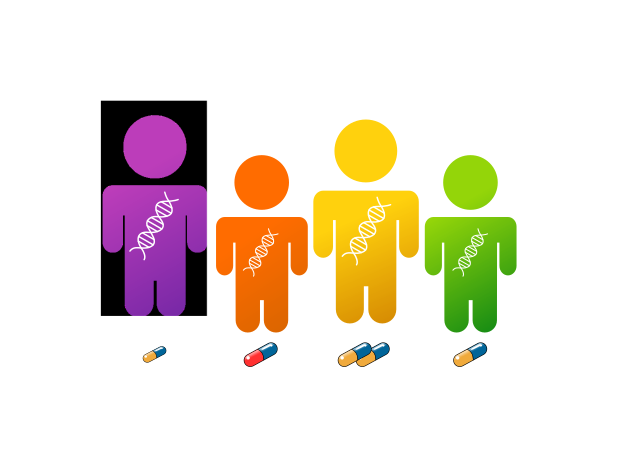
Genetics contributes to individual differences not only in physical characteristics, but also at the pharmacological level. Pharmacogenetics studies the relationship between genetic variability and how individuals respond to drugs. This information supports doctors in therapeutic decision-making, including the selection of active compounds and the adjustment of doses, with the goal of maximising therapeutic effects and minimising the risk of adverse reactions.

What mypharmagenes® analyses?
The test evaluates genetic variants associated with the metabolism and response to specific drugs, selected on the basis of scientific validation and proven clinical utility. The analysis covers 15 genes and 85 genetic variants, with results informing clinical decisions across 114 commonly prescribed medications.
- Identification of the patient’s genotypic profile in relation to drug metabolism
- Support for more adequate drug dosage prescription
- Assessment of the patient’s likely response to treatment
- Guidance on avoiding or minimising adverse drug reactions
- Basis for selecting alternative therapeutic agents when necessary
Therapeutic areas covered:

Psychiatry

Neurology

Pain management

Cardiology

Oncology

Gastroenterology

Immunosuppression

Rheumatology
Urology

Infectiology
clinical indications:
MyPharmaGenes® may be indicated in the following clinical contexts:
- Prior to initiating new pharmacological therapies
- In patients who have not achieved therapeutic goals with current treatment
- In patients experiencing moderate to severe adverse effects
An interactive WebApp included with the test
MyPharmaGenes® is supported by an interactive WebApp that provides patients and their healthcare professionals with ongoing access to the genetic report. It is designed to facilitate the practical application of pharmacogenetic results in clinical settings.
- Consultation of pharmacogenetic results for all 114 covered drugs
- Management of the patient’s current medication portfolio
- Recording of drugs associated with adverse effects
- Detailed information on the genes and variants evaluated
Drugs evaluated by therapeutic areA
-
Amitriptyline, Amoxapine, Amphetamine, Aripiprazole, Atomoxetine, Brexpiprazole, Bupropion, Citalopram, Clobazam, Clomipramine, Desipramine, Diazepam, Doxepin, Escitalopram, Flibanserin, Fluvoxamine, Haloperidol, Iloperidone, Imipramine, Nortriptyline, Paroxetine, Perphenazine, Pimozide, Protriptyline, Quetiapine, Risperidone, Sertindole, Sertraline, Thioridazine, Trimipramine, Venlafaxine, Vortioxetine, Zuclopenthixol
-
Brivaracetam, Carbamazepine, Deutetrabenazine, Donepezil, Eliglustat, Phenytoin, Fosphenytoin, Galantamine, Lamotrigine, Meclizine, Oxcarbazepine, Pitolisant, Siponimod, Tetrabenazine, Tolperisone, Valbenazine
-
Carisoprodol, Celecoxib, Codeine, Flurbiprofen, Hydrocodone, Ibuprofen, Lofexidine, Lornoxicam, Meloxicam, Oliceridine, Piroxicam, Tenoxicam, Tramadol
-
Acenocoumarol, Atorvastatin, Clopidogrel, Phenprocoumon, Flecainide, Fluvastatin, Losartan, Lovastatin, Mavacamten, Metoprolol, Pitavastatin, Pravastatin, Propafenone, Ranolazine, Rosuvastatin, Simvastatin, Warfarin
-
Capecitabine, Cisplatin, Erlotinib, Fluorouracil, Irinotecan, Mercaptopurine, Ondansetron, Pazopanib, SN-38, Tamoxifen, Tegafur, Thioguanine, Tropisetron
-
Dexlansoprazole, Dronabinol, Lansoprazole, Metoclopramide, Omeprazole, Pantoprazole
-
Azathioprine, Tacrolimus
-
Allopurinol, Lesinurad
-
Darifenacin, Fesoterodine, Mirabegron, Tamsulosin, Tolterodine
-
Abacavir, Atazanavir, Efavirenz, Flucytosine, Flucloxacillin, Nevirapine, Voriconazole

Turnaround time
15 working days
Scientific Studies
[2] Steve Connor (2003) “Glaxo chief: Our drugs do not work on most patients”, Independent/UK, 8/12/2003.
[3] Spear, B.B., Heath-Chiozzi, M. & Huff, J., “Clinical Application of Pharmacogenetics”. Trends Mol Med 7.5 (2001):201-204.
[4] Böhm, R. & Cascorbi, I., “Pharmacogenetics and Predictive Testing of Drug Hypersensitivity Reactions”. Front Pharmacol 7 (2016): 396.
[5] Lauschke, V.M., Milani, L. & Ingelman-Sundberg, M. “Pharmacogenomic Biomarkers for Improved Drug Therapy—Recent Progress and Future Developments”. AAPS J 20.1 (2018): 4.
[6] Gaedigk, Andrea, et al. “Characterization of Reference Materials for Genetic Testing of CYP2D6 Alleles: A GeT-RM Collaborative Project”. J Mol Diagn 21.6 (2019): 1034-1052.